
Inquiry
Leave Your Message

2026 Best Types of Welding Flanges for Global Buyers

Selecting the right Welding Flanges is a practical engineering decision, not a simple product comparison. Global buyers must examine pressure class, flange dimensions, material grade, welding method, corrosion exposure, and applicable standards. A flange that performs well on a low-pressure water line may fail under sour gas, thermal cycling, or repeated vibration. Small details matter. So does documentation.

Dr. John C. Lippold, a respected welding metallurgy expert, has emphasized, “Welding is a metallurgical process, not merely a joining operation.” This principle applies directly to Welding Flanges. Heat input can change the heat-affected zone, distort the flange face, or reduce resistance to corrosion. Experienced buyers therefore review welding procedures, filler metals, inspection records, and traceability before approving a supplier. ASME B16.5, ASME B16.47, and EN 1092-1 may guide selection, depending on the project and market. Yet standards alone do not guarantee a suitable result. Material certificates must match the delivered parts. Dimensions should be checked, not assumed.

This 2026 guide examines weld neck, slip-on, socket weld, blind, and lap joint flanges for international applications. It considers installation conditions, maintenance access, lead times, and total ownership cost. Some recommendations remain imperfect because site data is often incomplete. That deserves attention. A lower purchase price can hide machining inconsistencies, weak packaging, or delayed certification. Reliable sourcing means asking difficult questions early, comparing evidence, and choosing Welding Flanges that remain dependable after installation, not only attractive on a quotation.
2026 Best Types of Welding Flanges for Global Buyers

Welding Flanges: Definition, Purpose, and Core Design Principles

Welding Flanges: Definition, Purpose, and Core Design Principles

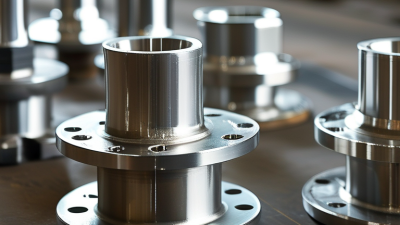
A welding flange is a machined ring joined to a pipe by welding. It creates a detachable connection for valves, pumps, fittings, and maintenance sections. Bolts clamp the flange faces, while a gasket helps contain pressure and prevent leakage. Unlike a simple pipe joint, the flange transfers load through bolts, faces, gasket, and welds.

Its design must match the pipe size, pressure, temperature, and service fluid. The bore should align with the pipe to reduce turbulence and welding stress. Face finish also matters because a rough or damaged surface may crush the gasket unevenly. Common designs include weld neck, slip-on, socket weld, and blind flanges. Each option changes installation effort, strength, and inspection requirements. A weld neck flange usually suits demanding cyclic or high-pressure service, but selection still depends on engineering data.

Tips: Check dimensions against the applicable standard. Confirm material compatibility before welding. Inspect the weld area for cracks, distortion, and incomplete fusion. I always recheck bolt-hole orientation on site. It is easy to overlook. A flange may meet its pressure rating yet fail in service if alignment is poor. Thermal expansion, corrosion allowance, gasket compression, and bolt tightening sequence deserve equal attention. One practical lesson is clear: visual confidence is not enough. Records, inspection results, and controlled installation provide stronger evidence of reliability.
How Welding Flanges Are Classified by Connection and Neck Design

2026 Best Types of Welding Flanges for Global Buyers

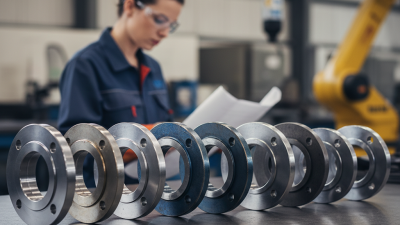
Welding flanges are commonly classified by connection method and neck design. The connection affects installation, strength, inspection, and maintenance. Weld neck flanges use a tapered hub and a butt weld. They suit high-pressure lines, thermal cycling, and demanding process systems. The smooth transition reduces stress concentration near the pipe joint.

Slip-on flanges slide over the pipe before fillet welding. They are easier to align and often reduce installation time. However, their weld area requires careful inspection, especially in vibrating service. Socket weld flanges hold smaller pipes inside a recessed socket. They provide accurate positioning, but poor root clearance can create crevice corrosion. Threaded flanges avoid welding, though they need clean, compatible threads and controlled service conditions.

Neck design also changes performance. A standard tapered neck supports gradual load transfer. Long weld neck flanges extend farther and can replace a short pipe spool in some layouts. Lap joint flanges use a loose backing flange with a stub end, helping frequent dismantling and alignment. Blind flanges close pipe ends without a bore, but they are not suitable for every pressure cycle.

In field selection, I check pipe schedule, facing, pressure class, temperature, material, and local dimensional standards. Small dimensional differences can stop a reliable assembly. A common mistake is choosing by nominal size alone. It looks efficient, but it can cause leakage, misalignment, or unnecessary rework. No selection chart replaces a verified drawing and service review.

Best Welding Flange Types for Different Piping Applications

Choosing the right welding flange depends on pressure, temperature, pipe size, and maintenance access. ASME B16.5:2022 covers flanges from NPS 1/2 to 24 and pressure classes from 150 to 2500. These limits matter in real projects.

Weld neck flanges suit high-pressure, high-temperature, and cyclic piping. Their tapered hub reduces stress near the weld. They are common around steam headers, process lines, and refinery equipment. Slip-on flanges cost less and install easily, but they need accurate alignment. They fit low- to moderate-pressure utility water and compressed-air systems. Socket weld flanges serve small-bore lines, where internal turbulence and clean welding remain important.

Lap joint flanges support frequent dismantling. They work well with stainless or corrosion-resistant stub ends in water treatment and chemical service. Blind flanges isolate pumps, vessels, and future branch connections. For large pipelines, ASME B16.47 covers NPS 26 through 60, which helps buyers compare dimensions before ordering. The 2024 UNESCO World Water Development Report states that agriculture accounts for about 70% of global freshwater withdrawals. Water projects therefore need practical corrosion control, not only low purchase prices. In my experience, buyers sometimes select a flange by pressure class alone. That is incomplete. Gasket material, bolt loading, thermal cycling, and field welding quality can change the result. A technically correct choice may still fail during maintenance.

2026 Best Types of Welding Flanges for Global Buyers - Best Welding Flange Types for Different Piping Applications
Flange Type Pipe Connection Typical Pressure Classes Best-Fit Piping Applications Main Advantages Important Limitations Common Standards
Weld Neck Flange Butt-welded to the pipe; the tapered hub provides a gradual transition. Class 150–2500
PN 6–PN 420
High-pressure, high-temperature, cyclic-service, steam, process, power-generation and critical chemical piping. Excellent stress distribution, strong fatigue resistance and good alignment for demanding service. Higher cost, greater weight and more installation time than slip-on flanges; requires qualified butt welding. ASME B16.5, ASME B16.47, EN 1092-1, ISO 7005-1
Slip-On Flange Pipe passes through the flange and is fillet-welded on the inside and outside. Class 150–600
PN 6–PN 40
General industrial, water, compressed-air, utility and low-to-medium-pressure piping. Easy pipe fit-up, lower purchase cost and simpler field installation than weld neck designs. Lower fatigue strength and lower mechanical integrity than weld neck flanges; not the preferred choice for severe cyclic service. ASME B16.5, EN 1092-1, ISO 7005-1
Socket Weld Flange Pipe is inserted into a socket and fillet-welded around the outside. Class 150–1500
PN 6–PN 100
Small-bore, high-pressure instrument, hydraulic, chemical and utility lines, commonly for smaller nominal pipe sizes. Good internal alignment, compact design and no need for internal pipe access during installation. Requires a controlled internal gap before welding; crevice and corrosion concerns can occur if the joint is not correctly detailed or inspected. ASME B16.5, ASME B16.11, EN 1092-1
Lap Joint Flange Loose flange used with a separate stub end that is butt-welded to the pipe. Class 150–600
PN 6–PN 40
Systems requiring frequent dismantling, expensive corrosion-resistant alloys, lined piping and maintenance-intensive process lines. Flange can rotate for bolt-hole alignment; the loose flange may be reused when the stub end remains serviceable. Not suitable where the flange must provide strong resistance to bending moments; requires a compatible stub end. ASME B16.5, ASME B16.47, EN 1092-1
Blind Flange Solid disc bolted to another flange to close a pipe end, valve outlet or equipment nozzle. Class 150–2500
PN 6–PN 420
Pressure testing, isolation, future branch connections, vessel nozzles and maintenance shutdowns. Provides positive closure and allows later access for inspection or system expansion. Does not connect directly to the pipe by welding; thickness and bolt loading must be checked for pressure and temperature service. ASME B16.5, ASME B16.47, EN 1092-1, ISO 7005-1
Long Weld Neck Flange Extended tapered neck is butt-welded to the pipe or used as an integrated nozzle connection. Class 150–2500
PN 6–PN 420
Pressure-vessel nozzles, high-temperature systems, heavy-wall piping and applications needing additional reinforcement or a longer transition. Long hub improves load transfer and can reduce local stresses at vessel or pipe connections. More expensive and less compact; must be selected using the applicable vessel, piping and design calculations. ASME B16.5, ASME B16.47, EN 1092-1
Reducing Flange Flanged connection with a smaller bore than the mating pipe or equipment nozzle. Class 150–600
PN 6–PN 40
Compact diameter transitions in process, water, utility and equipment-connection piping. Combines a flange connection and diameter reduction in one component, saving space and reducing the number of fittings. May create higher local turbulence and stress; eccentric or concentric geometry must match the service and piping layout. Manufactured to project specifications based on ASME B16.5 or EN 1092-1 dimensions
Orifice Flange Usually a pair of raised-face flanges with pressure-tap connections for an orifice plate. Class 300–1500
PN 16–PN 250
Flow measurement of liquids, gases and steam where differential-pressure measurement is required. Provides a standardized mounting arrangement for an orifice plate and upstream/downstream pressure taps. Requires correct tap orientation, gasket selection, straight-run planning and careful installation to maintain measurement accuracy. ASME B16.36, ASME B16.5, ISO 5167
Spectacle Blind Flange Assembly Permanent figure-eight plate installed between flanges; one side is open and the other side is solid. Commonly Class 150–600
PN 6–PN 40
Positive visual isolation in hydrocarbon, chemical, gas and maintenance-critical process piping. Clearly indicates whether the line is open or positively blinded, supporting safer maintenance procedures. Heavier and more space-consuming than a standard blind; line must be adequately supported during operation and repositioning. ASME B16.48, ASME B16.5, EN 1092-1
Threaded Flange Threaded bore screws onto externally threaded pipe; no welding is required for the flange connection. Class 150–600
PN 6–PN 40
Low-temperature, low-risk utility lines and locations where welding is restricted or impractical. Can be installed without hot work and is convenient for certain small-bore systems. Not generally preferred for high-temperature, high-pressure, vibration or severe cyclic service because the threaded joint can concentrate stress and leak. ASME B16.5, EN 1092-1

How to Select Flanges by Material, Pressure, Temperature, and Media

2026 Best Types of Welding Flanges for Global Buyers

Selecting a welding flange starts with the medium, not the price. Water, steam, hydrocarbons, acids, and oxygen demand different material controls. Carbon steel suits many dry, moderate-temperature services. Stainless steel offers better resistance in chloride or corrosive environments. Nickel alloys may be necessary for severe chemical exposure, but their cost requires justification.

Pressure and temperature must be checked together. ASME B16.5 covers NPS 1/2 through 24 and pressure Classes 150 to 2500, with ratings changing as temperature rises. A Class 300 flange is not automatically safe at every operating condition. Verify the pressure-temperature table, gasket type, bolt grade, and welding procedure. Small details matter.

Media compatibility also includes solids, velocity, and cycling. Thermal expansion can loosen bolts or distort a joint. In field inspections, I have seen clean-looking flanges fail because the gasket was selected only by nominal pressure. That shortcut is risky. The NACE IMPACT study estimated global corrosion costs at about 3.4% of worldwide gross domestic product. Material selection deserves careful review. A useful specification should state design pressure, design temperature, fluid chemistry, corrosion allowance, facing, schedule, and inspection requirements. I would also question unusually low quotations; they may hide weaker traceability or incomplete testing.

Global Buyer Checklist for Standards, Quality, and 2026 Sourcing Needs

For 2026 sourcing, welding flange selection should begin with service conditions, not price. Choose weld neck flanges for high pressure, thermal cycling, and critical pipelines. Slip-on flanges suit moderate loads and simpler installation. Socket weld flanges fit smaller, cleaner process lines. Blind flanges isolate equipment during maintenance. Lap joint flanges help systems requiring frequent alignment changes.

The buyer checklist should name the governing standard clearly. ASME B16.5 covers common sizes through NPS 24, while ASME B16.47 covers larger flanges. EN 1092-1 and ISO 7005 may apply to European projects. Confirm pressure class, facing, bore, wall thickness, and bolt-hole dimensions. Specify materials, such as ASTM A105 carbon steel or ASTM A182 stainless steel. Require heat numbers, material certificates, PMI records, and dimensional reports. Welding procedures and non-destructive testing should match the project risk.

Demand is becoming more documentation-heavy. The IEA’s World Energy Investment 2024 report estimated global energy investment above 3 trillion dollars, with clean-energy investment exceeding 2 trillion dollars. These projects often require traceability across several countries. The World Steel Association reported about 1.89 billion tonnes of crude steel production in 2023, showing the scale of material sourcing. Still, volume does not prove quality. A certificate can contain errors. Buyers should verify samples, audit records, and inspect sealing faces before shipment. I have seen apparently correct drawings hide incompatible bolt patterns. That mistake remains expensive.

2026 Welding Flange Buyer Checklist: ASME Pressure Classes

Indicative pressure-class comparison for global buyers evaluating weld neck, slip-on, socket weld, lap joint, and blind flange assemblies. Values are approximate ambient-temperature ratings for carbon-steel flange material groups and must be verified against the applicable standard, material, temperature, and design conditions.

Procurement checks: confirm flange type, nominal pipe size, facing, pressure class, material grade, dimensional standard, temperature rating, traceability documents, surface condition, and inspection requirements. Reference basis: ASME B16.5 pressure-class system.