Quick Opening Manholes 10 Essential Tips for Efficient Maintenance
Quick-Opening Manholes are essential for efficient maintenance in urban environments. These manholes allow for swift access to underground systems. Their design enhances the speed and safety of repairs, reducing downtime. Cities rely on them for effective waste management and infrastructure upkeep.
Implementing best practices for maintaining Quick-Opening Manholes can lead to significant improvements. Assessing their condition regularly is crucial. Neglect can result in costly repairs and hazards. Additionally, proper training for maintenance crews enhances safety and efficiency. Each team member should understand the mechanisms involved.
Establishing a schedule for inspections can prevent unexpected issues. When manholes are overlooked, problems can escalate quickly. A reliable maintenance approach involves consistent checks and repairs. This proactive strategy ensures public safety and optimizes city services. Reflection on previous maintenance challenges also fosters improvement.

Understanding the Importance of Quick Opening Manholes in Urban Infrastructure
Quick opening manholes play a crucial role in urban infrastructure. Data from the Urban Mobility Report indicates that approximately 15% of traffic congestion is linked to roadworks and maintenance activities. Quick access to utility access points can significantly reduce the time roadways are disrupted. When manholes can be opened promptly, it allows for more efficient service repairs and faster restoration of normal traffic flow.
Regular maintenance of these structures is vital. A study by the National Association of Sewer Service Companies shows that 25% of infrastructure failures are due to inadequate access for maintenance crews. Efficient designs can minimize time spent handling these manholes, thus enhancing the overall resilience of urban systems. This increase in efficiency is beneficial not just for service management, but also for public safety and urban mobility.
Moreover, inspections and repairs often fall short due to outdated infrastructure. Many cities still rely on traditional, cumbersome manhole designs, complicating quick access. Urban planners must reconsider existing frameworks. The goal should be to adopt modern designs that support swift operational responses while improving worker safety. It is essential to reflect on current practices to optimize urban infrastructure and adapt to growing city demands.
Key Factors Affecting Manhole Maintenance Efficiency and Safety Standards
Efficient manhole maintenance is crucial for safety and operational performance. Key factors include regular inspections, safe removal procedures, and effective sealing techniques. Inspecting for damage or blockages should occur frequently. This prevents future problems and ensures quick access when needed.
Safety standards play a significant role. Workers must use proper gear to minimize risks. Awareness of traffic and environmental hazards is essential. Regular training for staff enhances skills and safety measures. However, even with protocols in place, lapses can happen. Reviewing past incidents is vital. This can highlight gaps in training or procedures.
Communication among teams ensures everyone is on the same page. Clear protocols boost efficiency and reduce accidents. Incorporating technology, like drones for inspection, could improve oversight. However, it may be costly and require further adaptation. Balancing cost and efficiency remains a challenge. Always seek feedback to refine processes and enhance safety standards.
Efficiency and Safety Standards in Manhole Maintenance
Essential Tools and Technologies for Quick Access to Manholes
When it comes to manhole maintenance, the right tools and technologies can make all the difference. Efficient access starts with the correct equipment. Using lightweight, durable tools can greatly reduce the time spent opening manholes. Leveraging adjustable lifting devices can lessen physical strain while providing robust support. A well-designed access system ensures safety while allowing quick entry.
Incorporating technology enhances maintenance operations significantly. Remote sensing tools and cameras facilitate inspections without manual entry. This not only ensures thorough evaluations but also reduces the risk of accidents. However, challenges remain. Not all tools are universally effective. Investing in training is vital for staff to adapt to new technologies. Continuous learning helps overcome obstacles in implementing these tools effectively.
Maintenance teams must assess their specific needs regularly. Some might find basic tools sufficient, while others require advanced technology. Balancing cost and efficiency is a crucial reflection. Each project might demand a different approach. Pondering these aspects leads to wiser decisions. Often, improvement lies in understanding what works best for your team, rather than simply optimizing tools.
Best Practices for Regular Inspection and Preventive Maintenance of Manholes
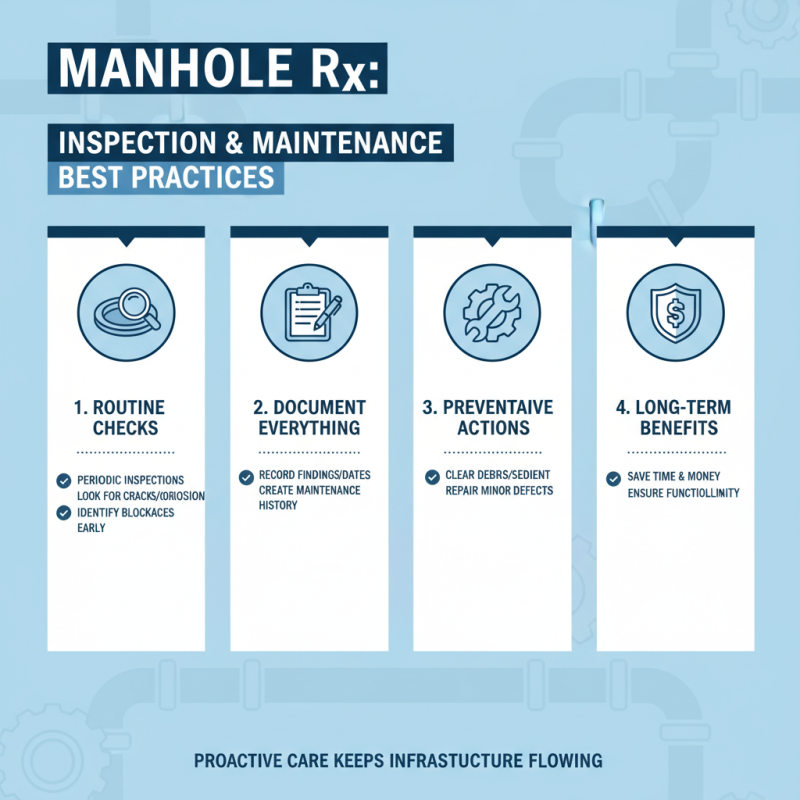
Regular inspection and preventive maintenance of manholes are crucial for ensuring their functionality. Inspecting manholes periodically helps identify issues before they escalate. Look for cracks, signs of corrosion, or blockages. These visual inspections can save time and money in the long run. Documenting findings during these checks creates a valuable history for future maintenance.
Preventive maintenance is often overlooked. Simple tasks like cleaning debris and ensuring proper sealing can prevent significant problems. Create a schedule for routine checks. Regular maintenance can reduce emergency repairs significantly. Establishing a team dedicated to this task may improve reliability. Sometimes, despite these efforts, unexpected issues arise. Always be prepared for the unforeseen.
Engaging local experts for consultation can enhance practices. Their insights can reveal potential weaknesses in your current strategy. Continuous learning and adapting to new technologies can lead to better outcomes. Over time, reviewing past inspections allows for critical assessment. Reflecting on these experiences fosters growth and improvement.